Last Updated: November 2026
Every heat pump puts out less heat as the air outside gets colder. The question for a Colorado winter is not whether yours slows down, but how much of your house it still carries on the coldest night, and what covers the rest. Sundog installs cold-climate heat pumps in Aurora and the towns around it, and we answer that question with the manufacturer's published low-temperature data set against your house's measured heat loss.
That comparison settles three things before you see a price: which model and size, how much backup heat and of what kind, and where the outdoor unit goes so snow, ice and defrost water never block it. Sundog's typical range for a cold-climate ducted system on suitable existing ducts is $13,000 to $25,000, set at the site visit and in the written estimate. For houses without ducts, the same reasoning applies room by room on our ductless mini-split jobs, and owners leaving gas altogether start with heat pump conversion.
An all-electric cold-climate system for a cold upstairs
- Project price
- $23,600
- On site
- 4 days
- Where
- Parker
- The house
- Early-2000s two-story, finished basement
Cold-climate equipment earns its name in the published low-temperature data, not on the box. In this early-2000s Parker two-story, about 2,700 square feet, the owners wanted to give up gas heat. They also wanted to fix a second floor that ran about 4 degrees cooler than the main floor on cold nights.
The load calculation at design temperature called for about 4 tons of heat, so we chose a 4-ton variable-speed model from its 5°F output against that load. Even a cold-climate system needs backup for the coldest hours. Here that was 15 kW of electric strip in two stages, so it comes on in steps. The 200-amp panel's load check, with the range and dryer counted, cleared a 40-amp outdoor circuit and 60- and 30-amp backup circuits.
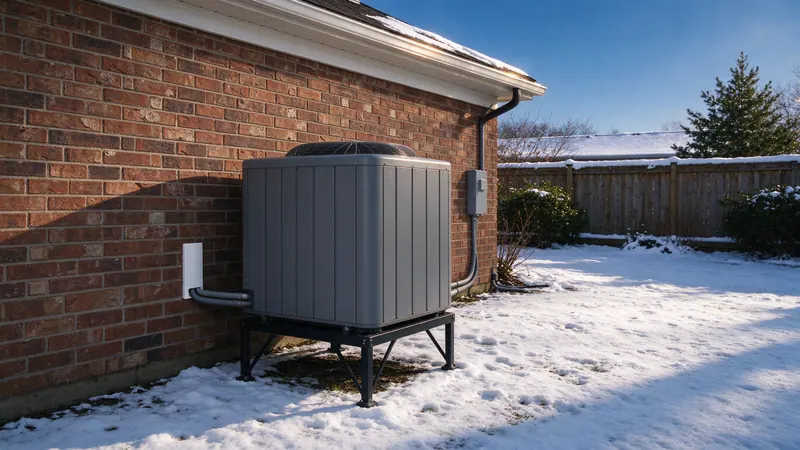
Placement matters as much as the model. The old condenser sat on the north side in drifting snow, so the new outdoor unit went on an 18-inch stand there, on a 50-foot line set, with a clear path for defrost meltwater.
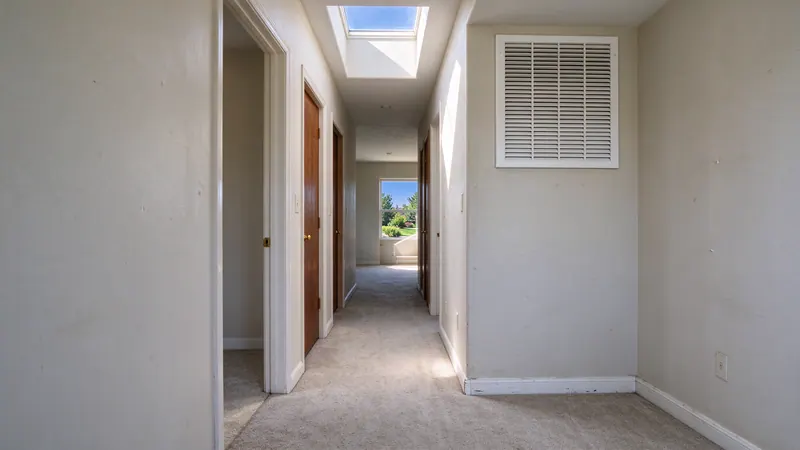
The cold upstairs turned out to be an airflow problem: four bedrooms and no return on that floor. We ran a 14-inch return up a stacked closet chase and added a balancing damper on the main-floor branch. After commissioning we measured every room and adjusted until the two floors read close.
What happens on the first visit
A cold-climate estimate turns on one comparison: the heat your house loses on a design-cold night against the heat a given model delivers then. The visit gathers both sides of it.
Heat loss at design conditions
We measure the house room by room and run the heating load at the design condition for your location. That figure, in BTU per hour, is what the equipment and backup together have to meet. Our sizing guide shows how it is built.
Output at low temperatures
We set that load against the published capacity of candidate models at 17°F and 5°F, from the manufacturer's extended data for the exact indoor and outdoor pair, not the nominal rating.
Panel and backup
We read the panel and work out what it can carry: the outdoor circuit plus electric backup in stages, or no strip at all if a furnace stays. Our panel guide explains the math.
Snow, wind and drainage
We look at where snow drifts and slides off the roof, which side takes the wind, and where defrost meltwater will go, then choose the spot and the stand height.
What the low-temperature numbers tell you
A nominal 3-ton heat pump is rated at about 36,000 BTU per hour in mild weather. At 5°F it delivers less, and how much less is the real difference between a standard unit and a cold-climate one. The figure that matters is the published capacity at 5°F for the matched indoor and outdoor pair, at the compressor speed it can sustain.
ENERGY STAR's cold-climate criteria ask for a heating efficiency (COP) of at least 1.75 at 5°F, with capacity at 5°F holding at least 70 percent of the 47°F rating. NEEP keeps a public list of cold-climate models with their full low-temperature data. Both are useful filters, but two models that pass can still differ at 5°F, so we compare the actual published output at your design condition with your load. The estimate lists the low-temperature capacity of the exact pair we propose, so you can check it yourself. Our guide to cold-weather performance goes further into the curves.
How much backup heat, and when it runs
Below the temperature where the heat pump's output meets the house's heat loss, something else has to make up the difference, and defrost cycles need covering too. We size that backup to the gap, not to the whole house.
Electric strip in the air handler
Sized in kilowatts to the gap at design conditions and split into stages, so the first stage comes on before the second. An outdoor lockout keeps the strip off in mild weather, where it only adds to the bill. The panel has to carry it, which is why we check first.
Your gas furnace
In a dual-fuel system the furnace is the backup and the controls hand over below a changeover point. No large electric circuit is needed.
No backup
Possible where the heat pump's output at design conditions meets the load with margin. We show you that comparison before you decide. Some owners keep a small strip anyway against an equipment failure in a cold snap; that choice is yours.
Start-up settings that matter in January
Good cold-climate equipment can still look expensive if the controls work against it. A thermostat left on factory settings can bring on strip heat at the first cold morning, or hand over to backup long before the heat pump runs out of capacity.
At start-up we set the backup staging and outdoor lockout from the equipment data and your load, check the defrost settings, and confirm the outdoor unit keeps heating at low temperatures instead of stepping aside early. Those settings go on the start-up sheet you keep. Our guide to backup heat explains how staging and lockouts work.
Placing the outdoor unit for snow and defrost
Where the outdoor unit sits matters as much as which model it is. Each of these comes from the walk around the house on the first visit.
Above the snow
We set the unit on a stand or wall bracket high enough to stay above drifting snow on that side of the house, so the coil can breathe and the base can drain. Keeping that base clear is part of heat pump maintenance.
Out from under the roof
Snow and ice sliding off a roof can bend a fan guard and bury the coil. We keep the unit out from under the drip line.
A path for meltwater
On a cold, damp day the unit melts frost off its coil several times. That water has to drain away, not refreeze under the unit or across a walkway. See frost and defrost.
Wind and neighbors
A coil facing the prevailing wind drifts in faster. We also keep the unit away from bedroom windows, yours and next door, where the yard allows. More in outdoor unit placement.
Rebates for cold-climate equipment
Xcel Energy runs a residential heat-pump rebate for qualifying equipment at qualifying service addresses, and qualifying depends heavily on the equipment's cold-weather ratings. Aurora's F-3 program covers a mapped area with active Xcel gas service. Each has its own installation and application dates, so check the current program dates, and each depends on your address, the matched equipment and how the job is installed. We check what applies before the estimate is final and choose equipment with the program's requirements in view. The federal 25C tax credit ended for systems installed after 2025. Our Aurora rebate guide has the details, and the planning guide puts rebates in order with the rest of the decision.
What is included in a cold-climate installation
- Heating load at design conditions, and the matched pair's published low-temperature capacity on the estimate
- Removal of the old furnace or air handler, coil and outdoor unit, with refrigerant recovered
- Stand or wall bracket above the snow line, with a drainage path for defrost water
- New line set, pressure-tested with nitrogen and evacuated before charging
- Electric backup sized to the gap and staged, or furnace changeover wiring for dual fuel
- Outdoor and backup circuits with the electrical permit, and the mechanical permit for the system
- Backup staging, outdoor lockout and defrost settings set from the equipment data
- Start-up readings and settings recorded and left with you, with rebate paperwork
All-electric, dual fuel or ductless
| Cold-climate, all-electric | Cold-climate with a furnace | Cold-climate ductless | |
|---|---|---|---|
| Best fit | Good ducts, panel room, a wish to leave gas | A sound furnace, or gas wanted for cold nights | No ducts, an addition or one cold room |
| Backup heat | Electric strip in stages, sized to the gap | Gas furnace below a set changeover | Usually none per zone; sized to the room |
| Panel load | Outdoor circuit plus backup circuits | Outdoor circuit only | One circuit per outdoor unit |
| Our typical range | $13,000 to $25,000 | $19,000 to $28,000 with a new furnace | $4,500 to $6,500 for one zone |
How the job runs
- VisitHeat loss, equipment data, panel, snow
- Written estimate5°F capacity on paper
- PermitsMechanical and electrical
- InstallUsually one to four days
- Start-upStaging and lockout set, city inspection
Find out what your house needs before you compare equipment.
Get an EstimateQuestions about cold-climate heat pump installation
Will a cold-climate heat pump heat my house below zero?
Cold-climate models keep heating well below freezing. Whether one carries your whole house depends on its published output at that temperature against your heat loss, and we size backup to any gap.
Is there a standard temperature where backup should take over?
No. We set staging and lockout from your equipment's published output and your house's load, then check them at start-up. A setting copied from another house wastes energy or leaves you cold.
How do I know a model is really cold-climate?
Look for its published capacity at 5°F, ENERGY STAR cold-climate certification or a place on NEEP's cold-climate list. We put the 5°F capacity of the exact pair on your estimate.
Does the outdoor unit need a stand?
Usually. A stand or bracket keeps the coil above drifting snow and lets defrost water drain. The height depends on that side of the house and how snow collects there.
What does the written estimate include?
Model numbers and low-temperature capacity, duct and electrical work, the permit, removal, the pad or stand and the start-up checks, each on its own line.