Last Updated: November 2026
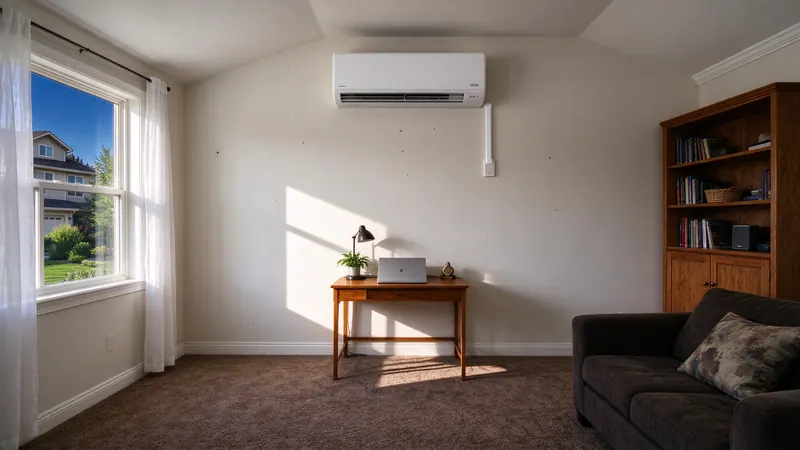
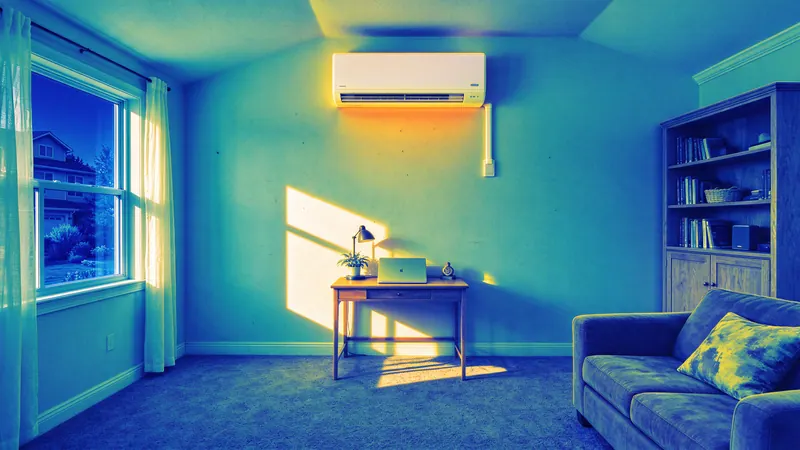
The room that sends you looking at mini-splits is usually one the main system never served well: a bonus room over the garage, a finished basement, a sunroom, an addition with no ducts at all. Sundog installs ductless mini-splits across Aurora to give those rooms their own heating and cooling. Sundog's typical range for a one-zone ductless system is $4,500 to $9,500, set at the site visit and in the written estimate.
The hard part is deciding how many heads the house needs, where each one hangs, and how its lines, power and drain reach the outdoor unit. A head in the wrong spot blows air at a desk, drips onto a shelf or short-cycles because it is too big for the room. So we plan rooms one at a time and mark every head on a sketch before you agree to anything.
Three ductless heads for a three-level house
- Project price
- $15,800
- On site
- 3 days
- Where
- Northglenn
- The house
- 1970s tri-level split-level
Split-levels have one thermostat and three different rooms to please. In this mid-1970s Northglenn tri-level, the upstairs bedrooms baked on summer afternoons and the half-below-grade family room stayed cold all winter. The furnace and AC themselves were fine.
Zoning the existing ducts was the obvious idea, but the upper branches were the longest and smallest in the house, and a damper can't send air that never reaches the room. So the central system kept the main level. A 2-ton cold-climate multi-zone outdoor unit went in to drive three heads, each sized from its own room load: 9,000 BTU in each upstairs bedroom and 12,000 in the family room.
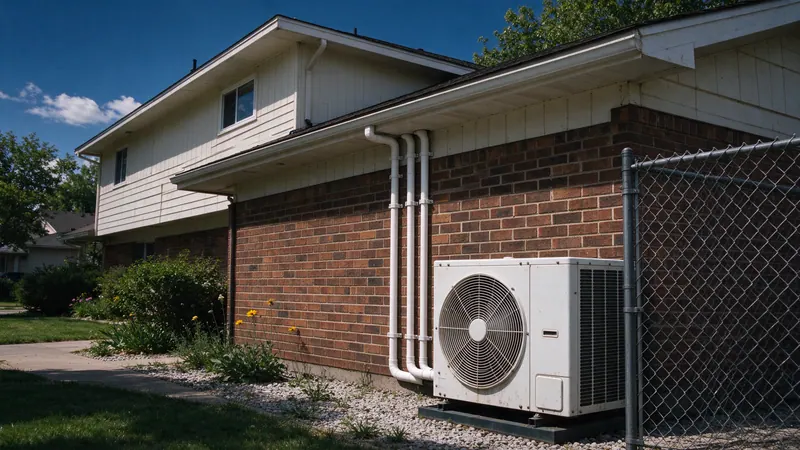
Head placement is where ductless jobs are won or lost. The family room's wall was partly below the outside grade, so we cored the penetration well above grade, and we added a small condensate pump to lift the water because it couldn't drain to daylight from there. The upper heads went on exterior walls we reached by ladder from the side yard. Line sets of about 25, 35 and 20 feet ran in one short PVC line-hide to the outdoor stand.
Every flare was torqued to spec, nitrogen-tested and pulled to vacuum. Each zone was commissioned on its own, and the outdoor unit went on one 25-amp circuit. The city inspected the mechanical and electrical work.
What happens on the first visit
We walk every room you want to change, and some you don't, because a head in one room affects the rooms around it. You see what each check found before we recommend a head count.
Room-by-room load
We measure each room's walls, windows and ceiling, note insulation and sun exposure, and ask whether the door usually stays shut. A closed bedroom door turns one zone into two.
Head type and placement
We look at where the air will throw, where the furniture sits, how you will reach the filter and what you are willing to see on the wall. Wall heads, ceiling cassettes and floor consoles each solve a different room.
Line, power and drain routes
We trace the shortest clean route for the line set through closets, joist bays or an exterior line-hide, find where condensate can fall to daylight, and note where a pump is needed instead.
Panel and outdoor spot
We read the panel for room for a dedicated circuit (our panel guide explains the math), then pick an outdoor spot with airflow, a stand above drifting snow and distance from bedroom windows next door.
One head, several heads or ducts
More heads are not automatically better. Each one adds cost, a filter to clean and a drain to keep running, and too many small zones on one outdoor unit can leave the system running below its minimum output on mild days. We match the design to the problem you actually have.
Single zone
One outdoor unit, one head. It fits one problem room: an addition, a garage conversion, a basement office. It is the simplest install and the easiest to keep running. See how we plan zones.
Multi-zone
One outdoor unit drives two to eight heads, each with its own control. It suits a floor of bedrooms or a split-level where every level wants a different temperature. The outdoor unit is sized to the connected rooms, not to the biggest head on the list. Adding rooms later takes planning; our note on adding zones covers it.
Ducts, or a mix
When most rooms already have ducts that carry their airflow, a ducted heat pump treats the whole house, and one or two heads cover the rooms the ducts miss. Our ducted vs ductless guide compares the two.
Where the head goes, and why it matters
Head placement decides how the room feels and how the job looks. We choose the spot from the room's load and how you use it, then confirm the line and drain can reach it.
Wall heads
The most common choice: high on an outside wall, short line run, gravity drain. They throw air across the room, so we keep them from aiming at a bed or a desk chair.
Ceiling cassettes and floor consoles
A cassette sits flush in the ceiling and spreads air four ways, which suits a square living room with attic space above. A floor console sits low, which suits a basement or a room with glass from sill to ceiling.
Ducted mini-split units
A slim ducted unit hidden in a closet or soffit serves two or three small rooms through short ducts. Nothing shows on the walls but grilles, at the cost of a little more design work.
Drains and cold nights
Two details separate a mini-split that works for years from one that brings callbacks: where the water goes and how the system handles a cold snap.
Condensate on every head
Every head makes water in cooling and every outdoor unit sheds meltwater in defrost. Indoors, the drain needs steady fall to the outside, or a small condensate pump where the head sits below grade or on an inside wall. Outside, we keep the drain outlet and the stand's meltwater off walkways and driveways, where an Aurora winter freezes them into ice.
Output at low temperatures
A head sized for cooling alone can fall short in January. For rooms that must stay warm we choose cold-climate equipment by its published heating output at 5°F, not its nominal rating. We also talk through backup: whether the room keeps its baseboard heater, and what happens during defrost. Our guide to cold-weather performance explains the numbers.
What a ductless system costs with Sundog
Sundog's typical range for one zone is $4,500 to $9,500. For two to four heads it is $9,000 to $18,000, and for five to eight heads $18,000 to $35,000 and up. Cold-climate systems priced by zone count run as below. Your number comes from the site visit and the written estimate.
| Cold-climate ductless system | Sundog's typical range |
|---|---|
| One zone | $4,500 to $6,500 |
| Two zones | $8,500 to $12,500 |
| Three zones | $12,500 to $18,500 |
| Four or five zones | $17,500 to $26,000 |
What moves it within a band: the heads' type and cold-weather rating, line-set and line-hide length, the number of wall penetrations, a condensate pump, a new circuit or panel work, a hard-to-reach outdoor spot and how much finish work the route needs. The cost page shows how these compare with ducted systems.
Rebates and incentives
Xcel Energy runs a residential heat-pump rebate for qualifying equipment at qualifying service addresses, and Aurora's F-3 program covers a mapped area with active Xcel gas service. Whether a mini-split qualifies depends on your address, the model and how it is installed, so we check what applies before the estimate is final and list the paperwork the program asks for. Check the current program dates with us when you book, since the installation and application deadlines are set by Xcel. The federal 25C tax credit ended for systems installed after 2025. Our rebate guide covers the details.
What is included in a ductless installation
- Room-by-room load and a head-placement sketch you approve before the estimate
- Outdoor unit and heads, with model numbers and low-temperature capacity on the estimate
- Wall or stand mounting above the snow line, and wall penetrations sealed inside and out
- New insulated line sets with flare connections torqued to the manufacturer's spec, in line-hide where they run outside
- Condensate drain for every head, with a pump where gravity cannot do the job
- Dedicated circuit and disconnect, with the mechanical and electrical permits
- Nitrogen pressure test and deep vacuum on every line before the refrigerant is released
- Each zone commissioned on its own, with start-up readings and rebate paperwork left with you
Single zone, multi-zone or ducted
| Single zone | Multi-zone | Ducted heat pump | |
|---|---|---|---|
| Best fit | One problem room or an addition | A floor or level of rooms that need separate control | Ducts that reach most rooms and carry the airflow |
| Control | One room | Each head on its own | One thermostat, or zoned ducts |
| Main checks | Room load, head spot, drain | Every room load, connected capacity, line routes | Whole-house load, static pressure, panel |
| Our typical range | $4,500 to $9,500 | $9,000 to $18,000 for two to four heads | $13,000 to $25,000 |
How the job runs
- Visitroom loads, head spots, routes, panel
- Written estimateevery head and line on its own
- Permitsmechanical and electrical
- Installheads, lines, drains, circuit
- Start-upeach zone tested, city inspection
Tell us which rooms bother you. We start with a first range and book the visit. Call (719) 417-2475 or get an estimate.
Get an EstimateDuctless mini-split installation in Aurora
Each room sized, each head placed on a sketch, every line in writing.
Get an EstimateQuestions about ductless mini-split installation
Can one mini-split head heat a whole floor?
Only in an open floor where the doors stay open and the load is small. Closed bedrooms, stairways and long hallways usually need their own heads or a ducted unit, which is why we work out each room's load first.
Can a mini-split be the only heat in a room?
Often, with cold-climate equipment chosen by its 5°F output. We look at the room's load on a cold night and decide with you whether an existing baseboard heater stays as backup.
Will I need a condensate pump?
Only where the drain cannot fall to the outside, such as a head on an inside wall or below grade. We decide on the visit and show it on the estimate.
Can you reuse my old line set?
Sometimes, if the diameter, length, condition and refrigerant suit the new equipment and the manufacturer allows it. Most of our ductless jobs use new line sets, and the estimate says which.
What does the written estimate include?
Model numbers and low-temperature capacity, duct and electrical work, the permit, removal, the pad or stand and the start-up checks, each on its own line.