Last Updated: November 2026
A furnace rests all summer and an air conditioner rests all winter. A heat pump does both jobs, so its filter loads faster, its coils see cottonwood in June and snow in January, and its drain runs in cooling while its outdoor unit defrosts in heating. Sundog maintains ducted heat pumps and ductless mini-splits across Aurora, and each visit covers the checks that keep both seasons working.
Sundog's typical range for heat pump maintenance is $100 to $200 per visit, and for a ductless system $89 to $200 per visit, depending on the system and the number of heads. Parts and repairs found on the visit are priced separately. Every visit ends with the readings in writing, so next year's visit has something to compare against.
A maintenance visit that finds the cause of a drip
- Project price
- $185
- On site
- 3 hours
- Where
- Cherry Creek
- The house
- Early-1980s two-story with sunroom and bonus room
A maintenance visit is the cheapest place to catch small problems. This early-1980s Cherry Creek house runs a ducted heat pump for most rooms and two ductless heads, one in a sunroom and one over the garage. Neither system had been serviced in three years, and the bonus-room head dripped at its front edge every summer.
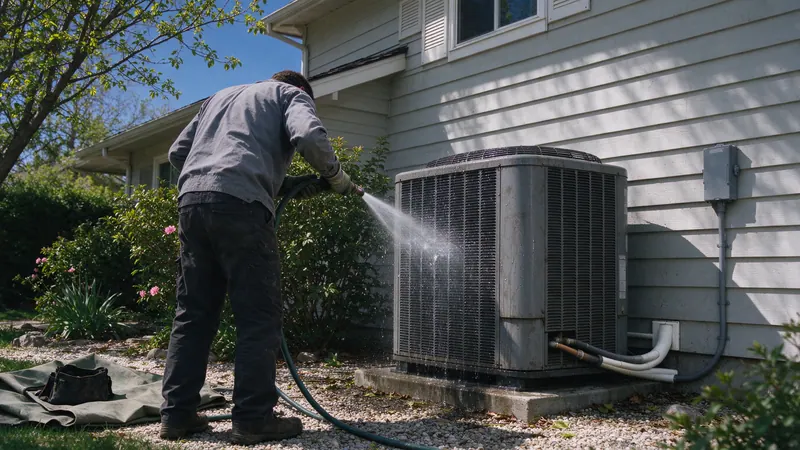
We covered both systems in one visit. At the basement air handler we changed the filter, checked the electrical parts and measured static pressure and the temperature split across the coil. Outside, the coil got rinsed and we took refrigerant pressures and line temperatures. We add refrigerant only when a reading points to a leak, and that is then a repair, not maintenance.
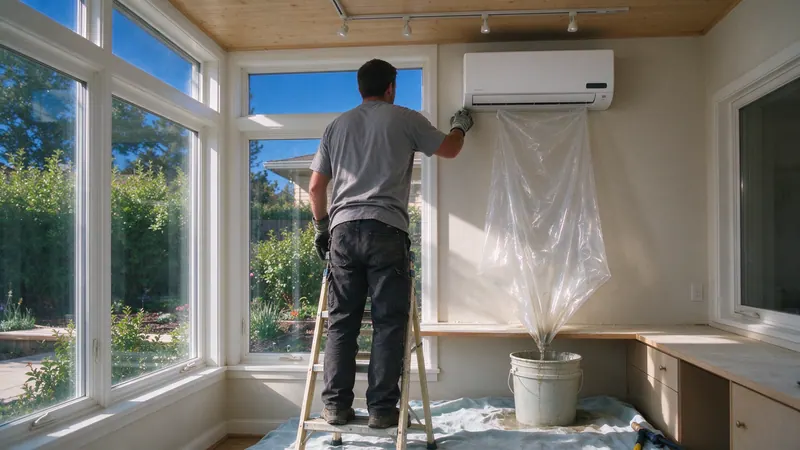
The ductless heads needed the most care. With a drop cloth over the desk and a cleaning bag hung under the bonus-room head, we washed the coil and blower wheel, which were heavy with dust, and flushed the condensate line. The flush showed a slow drain, the most likely cause of the drip, and we confirmed that water then ran freely outside. The sunroom head got the same cleaning, and both outdoor units got a defrost check.
The owners received every reading in writing. Next year's visit compares against them, which is how a slow change shows up before it becomes a repair call.
What a maintenance visit covers
We run the system first and listen, then work through it from the air you feel to the parts you don't see. Ducted systems and ductless heads get different care, and a house with both gets both on one visit.
Airflow and filter
We change or clean the filter, measure static pressure at the air handler and the temperature split across the coil. Rising static pressure points to a loaded filter, a dirty coil or a duct problem.
Coils and drains
We rinse the outdoor coil from the inside out with low pressure, inspect the indoor coil, and flush and test the condensate drain, pump and overflow switch.
Electrical parts
We test the capacitor against its rating, check the contactor for pitting, tighten connections, and measure voltage and amp draw on the compressor and fans.
Refrigerant, defrost and backup
We record pressures and line temperatures, check that the defrost control clears the coil, and confirm the backup heat or furnace changeover comes on where it is set.
Ductless heads need their own cleaning
A ductless head has no return duct and no big filter in front of it, so dust that a ducted system traps at the air handler lands on the head's coil and blower wheel. Over a few seasons that cuts airflow, slows the drain and can leave a musty smell when the head starts.
Bag cleaning
We cover the wall and furniture, hang a cleaning bag under the head and wash the coil and blower wheel with a low-pressure sprayer and a non-acid cleaner. The rinse water goes into the bag, not down the wall.
Drain and line-hide
We flush the drain to the outside, test any condensate pump, and check the line-hide and wall penetration for gaps that let in cold air or water.
What you can check between visits
These checks are safe for any owner and catch most of what leads to a repair call. Our maintenance checklist puts them on a calendar.
- Look at the ducted filter monthly in heavy heating and cooling months and change it when it is gray
- Rinse ductless head filters every few weeks of steady use, or as the manual says
- Keep snow, leaves and shrubs clear of the outdoor unit, and the space above it open
- Watch the outdoor drain outlet and the base of the unit for ice that does not clear between defrost cycles
- Notice if the aux or emergency heat light comes on more than it used to
- Leave panels on and skip the pressure washer; high pressure folds the coil fins flat
Winter care for the outdoor unit
Aurora winters are hard on the outdoor unit in ways a maintenance visit can see and fix. Most of it comes down to where water and snow end up.
Height above the snow
The unit needs air through its coil and a path for defrost meltwater to drain. We check that the stand or pad keeps it above drifting snow and that the base pan drain is open.
Roof drip
A unit under an eave with no gutter collects meltwater that refreezes into a ridge at its base. We note it in writing and suggest a diverter or gutter section, because the ice keeps coming back otherwise.
Clearance and placement
Shrubs, fences and stored items close to the coil starve it of air. Our note on outdoor unit placement covers the spacing manufacturers ask for.
Defrost that does its job
We watch a defrost cycle and confirm the coil clears. Our guide to cold-weather performance explains how output and defrost change as it gets colder.
Readings that show a slow change
A heat pump rarely fails all at once. A capacitor drifts below its rating, static pressure creeps up as the coil loads, amp draw rises as a motor wears. Each reading looks fine on its own; the trend is what matters. That is why we write every number down and compare it with the last visit.
What we record
Static pressure, temperature split, refrigerant pressures and line temperatures, capacitor values, amp draw on the compressor and fans, and the defrost and backup settings.
What a change tells us
A capacitor well below its rating is replaced before it strands you. A refrigerant reading that has moved since last year points to a leak, which is a repair, not a top-up. We add refrigerant only when a reading points to a leak and the leak is dealt with.
How often to book
Your equipment's installation manual sets the service interval its manufacturer expects, so start there.
Once a year at least
Most manuals call for yearly professional service. Because a heat pump runs in both seasons, a visit in spring catches winter wear before cooling season, and a fall visit checks defrost and backup heat before the cold.
More often for some homes
Houses near cottonwoods, homes with pets, and ductless heads in kitchens or busy rooms load filters and coils faster. A ductless system with several heads benefits from a look at each head every season it works hard.
What is included in a visit
- Ducted filter changed, or ductless head filters cleaned
- Outdoor coil rinsed, indoor coil inspected; ductless coils and blower wheels bag-cleaned where needed
- Condensate drains flushed and tested, pumps and overflow switches checked
- Capacitor, contactor, connections, voltage and amp draw checked
- Static pressure and temperature split on ducted systems
- Refrigerant pressures and line temperatures recorded
- Defrost, backup heat and thermostat settings checked
- Outdoor unit checked for level, clearance and height above snow
- Every reading left with you in writing, with anything to watch
Ducted and ductless visits compared
| Ducted heat pump | Ductless mini-split | |
|---|---|---|
| Filter | Changed at the air handler | Washed at each head |
| Coil cleaning | Outdoor coil rinsed; indoor coil inspected | Each head bag-cleaned; outdoor coil rinsed |
| Airflow check | Static pressure and temperature split | Blower wheel and air throw at each head |
| Drain | Air-handler drain and overflow switch | Each head's drain line and any pump |
| Our typical range | $100 to $200 per visit | $89 to $200 per visit |
How a visit runs
- Booktell us the system and head count
- Runlisten and watch both modes the weather allows
- Cleanfilters, coils, drains
- Measureelectrical, airflow, refrigerant, defrost
- Reportreadings in writing
Tell us what you have: ducted, ductless or both, and how many heads. Call (719) 417-2475 or book a visit.
Get an EstimateHeat pump maintenance in Aurora
Cleaned, measured and written down, so next year's visit can spot the change.
Get an EstimateQuestions about heat pump maintenance
How often does a heat pump need maintenance?
Most manufacturers call for professional service at least once a year, and your equipment's manual gives the interval. Because a heat pump works all year, many owners book in spring or fall.
Do ductless mini-splits need maintenance?
Yes, and the heads need more cleaning than many owners expect. Dust settles on the coil and blower wheel, which cuts airflow and slows the drain. A bag cleaning fixes both.
Will you add refrigerant during a maintenance visit?
Only when a reading points to a leak. A heat pump does not use up refrigerant, so low charge means a leak, and finding and fixing it is a repair priced on its own.
Can I hose off my outdoor unit myself?
A gentle garden-hose rinse with the power off is fine. Skip the pressure washer, which folds the fins flat, and leave the panels on.
What does the written estimate include?
Model numbers and low-temperature capacity, duct and electrical work, the permit, removal, the pad or stand and the start-up checks, each on its own line.