Last Updated: November 2026
The short answer
Check the filter monthly, keep the outdoor unit clear of snow, ice and debris, and watch the condensate drain. Once a year, or before each heating and cooling season, have a visit cover coils, drains, electrical parts, refrigerant readings, airflow and defrost. In Colorado, snow and the defrost cycle add winter checks a furnace never needed.
What you can check yourself
These take a few minutes and need no tools beyond a flashlight. ENERGY STAR recommends inspecting, cleaning or changing the air filter once a month.
- Filter: check it monthly and replace or wash it when it looks gray; a ductless head's filters slide out from under the front panel
- Outdoor unit: keep the clearance your manual gives on every side, with no leaves, grass clippings or stored items against the coil
- Snow: brush snow off the top and sides gently after a storm and keep the base clear so meltwater can drain
- Registers: keep supply registers and the return grille open and unblocked by furniture
- Condensate: look at the drain line and any pump in summer; water around the air handler is a sign to call
- Thermostat: check that backup heat shows only on cold nights, not every time the heat starts
Winter checks that matter in Colorado
Two winter conditions look alike from the kitchen window, and only one is a fault.
Frost and defrost: normal
In damp cold the outdoor coil frosts over and the unit reverses for a few minutes to clear it. You may see steam and hear the fan stop. A thin, even frost that clears on each cycle is normal; more in frost and defrost.
Ice that stays: not normal
A solid block of ice on the coil, ice building up in the base pan, or a unit that never stops defrosting. Do not chip at the coil fins. Switch to backup or emergency heat and book a repair visit. A roof drip line onto the unit is a common cause.
- Thin, even frost that clears on each defrost cycle
- A solid block of ice on the coil
- Ice building up in the base pan
Summer checks before the cooling season
In summer the same equipment cools, and water becomes the main thing to watch. Low airflow from a dirty filter or a weak return shows up first in this season. The indoor coil pulls moisture from the air, and it has to drain away.
- Pour a cup of water into the condensate trap or cleanout, where you have one, and see that it drains
- Listen for the condensate pump, if there is one, cycling after the system runs
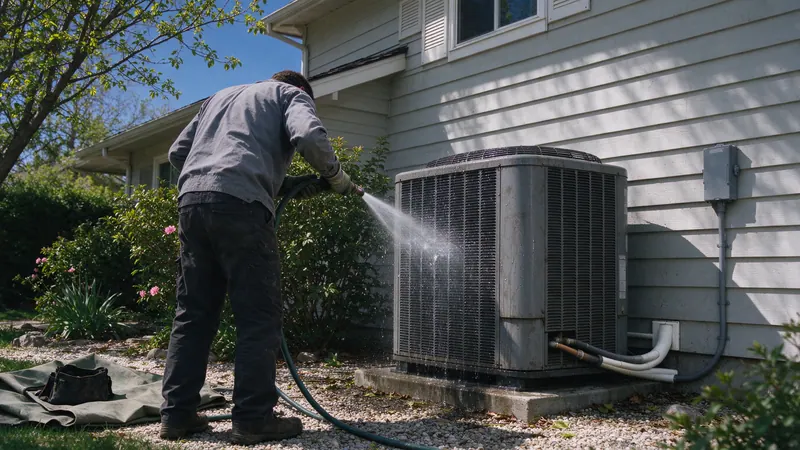
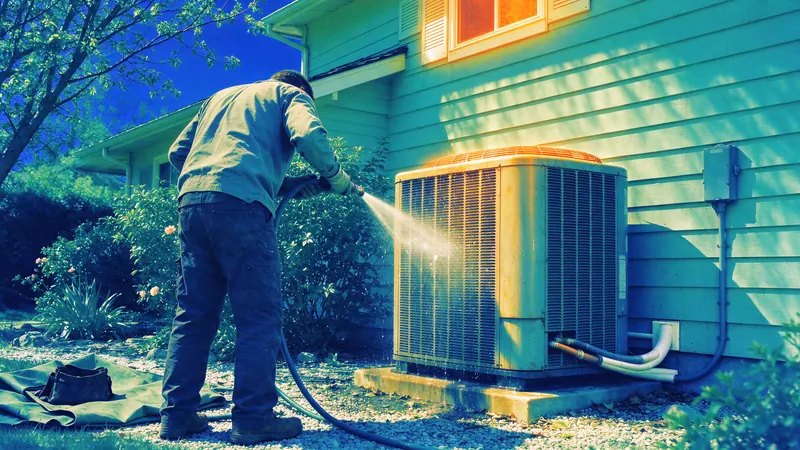
- Clear cottonwood fluff and grass clippings off the outdoor coil with a soft brush or a gentle hose rinse, power off
- Feel the supply air at a register: it should be noticeably cooler than the room within a few minutes
- Watch for ice on the copper line at the outdoor unit, a sign of low airflow or low charge that needs a visit
What a maintenance visit covers
A professional visit covers what you cannot see or measure. ENERGY STAR's maintenance checklist lists similar items for a contractor's annual check-up. These are the checks on a Sundog maintenance visit.
| Check | Why it matters |
|---|---|
| Filter fit and replacement | Air slipping around a loose filter dirties the coil |
| Indoor and outdoor coil cleaning | Dirty coils cut capacity in both seasons |
| Condensate drain and trap cleared | A blocked drain leaks into the ceiling or basement |
| Capacitor, contactor and electrical connections | The most common small failures, caught before they stop the unit |
| Refrigerant pressures and temperatures | Shows low charge or a restriction early |
| Airflow and temperature split | Confirms the ducts and blower deliver what the system needs |
| Defrost operation and backup heat staging | Keeps strip heat from running when it is not needed |
| Outdoor unit level, stand and clearance | Keeps meltwater draining and the coil above snow |
Want your own number? We start from your house and your bills.
Get an EstimateDuctless heads need their own attention
A ductless system has a coil and blower wheel in every room, close to where people live, so dust and buildup show up faster.
You
Rinse the washable filters in each head monthly in heavy-use seasons and let them dry before refitting.
A visit
Each head's coil and blower wheel cleaned with a bag and coil cleaner, each condensate line flushed and tested, and the outdoor unit checked as for a ducted system.
How often to book a visit
ENERGY STAR suggests checking cooling in spring and heating in fall. A heat pump does both jobs with the same equipment.
Once a year
Enough for many ducted systems in good condition. Book it in fall, so defrost and backup heat are checked before the cold.
Twice a year
Worth it for ductless heads in heavy use, homes with pets, or systems that run hard in both seasons. Spring for cooling and drains, fall for heating and defrost.
What a visit costs
Parts and repairs found on a visit are priced separately, before any work is done.
Ducted heat pump
Sundog's typical range is $100 to $200 per visit.
Ductless system
Sundog's typical range is $89 to $200 per visit, depending on the number of heads.
Keep a simple record
Note the date, the readings and anything replaced after each visit, alongside the model numbers and start-up readings from the install. Some manufacturer warranties ask for maintenance records, so check yours. The record also helps when weighing repair or replacement later.
Book a maintenance visit
Call (719) 417-2475 or book a visit. We check the system in the season ahead and leave the readings with you. For how the system behaves in the cold, read cold-weather performance.
Get an EstimateQuestions people ask
Should I cover my outdoor unit in winter?
No. A heat pump runs all winter and needs open airflow. Keep snow off the top and away from the sides instead.
How often should I change the filter?
Check it monthly, as ENERGY STAR recommends, and replace or wash it when it looks dirty. Pets, renovation dust and heavy use shorten the interval.
Does maintenance keep the warranty valid?
It depends on the manufacturer's terms. Some ask for maintenance records, so keep the visit notes and check your warranty document.