Last Updated: November 2026
Most Aurora houses already have what a ducted heat pump needs: a basement furnace, a supply trunk and ducts to every room. A heat pump uses those ducts to heat in winter and cool in summer, so in most homes it replaces both the AC and most of the work the furnace used to do. Whether it works well depends on three things we check before we size anything: how much heat the house loses, whether the ducts can carry the airflow, and whether the panel can carry the new circuits.
That is why our estimates start with measurements rather than with the label on the old equipment. Matching the old tonnage repeats whatever was wrong with the last system, and a heat pump is less forgiving of a weak return or an oversized unit than a gas furnace ever was.
Fixing the return before the heat pump went in
- Project price
- $18,900
- On site
- 3 days
- Where
- Littleton
- The house
- Early-1980s tri-level split-level
The owners of this early-1980s Littleton tri-level asked for a new heat pump. What their house needed first was air. The upstairs bedrooms ran cold in January and stuffy in July, and the hall return whistled every time the blower started.
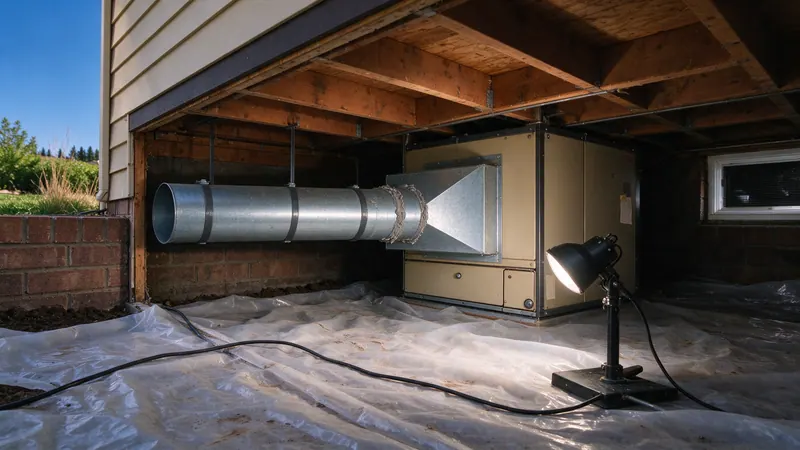
A heat pump delivers air at lower temperatures than a gas furnace, so it depends on airflow far more. Our static-pressure test read about 0.9 inches of water column, well above what a variable-speed blower can work against. The leakage test traced the main loss to the crawlspace, where the flexible return lay crushed flat under a joist. Sized on the old 3.5-ton nameplate, a new system inherits the same restriction. Sized on the load calculation, with the return repaired, the house needed 3 tons.
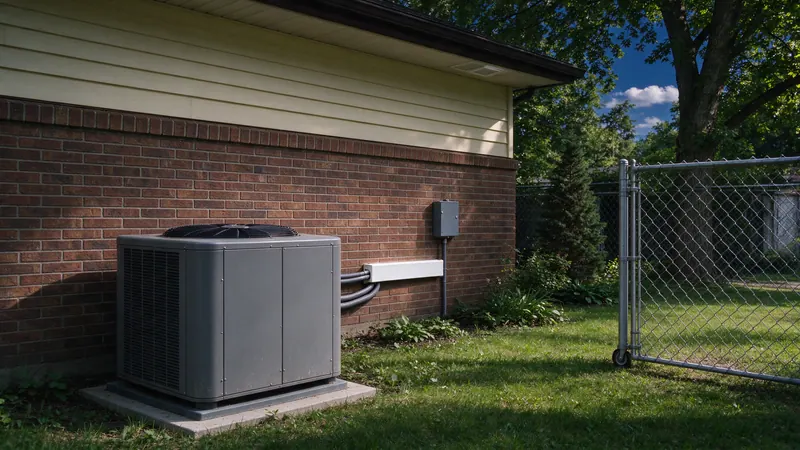
So the install started with the ducts. We replaced about 22 feet of crushed return with 14-inch rigid round, sealed roughly 40 joints with mastic and added a second return on the upper floor. Then the variable-speed air handler and its 10 kW backup strip went in the utility room, and the 3-ton cold-climate outdoor unit went on a new side-yard pad on a 35-foot line set. The strip was locked out above a set outdoor temperature.
The last step was the one that proves the work: we retested static pressure and leakage after commissioning, and the readings went to the owners with the model numbers.
What happens on the first visit
The visit takes the house apart on paper. Nothing gets recommended until these four checks are done, and you see what each one found.
Room-by-room load
We measure rooms, windows and ceilings and note insulation and air leakage, then run a Manual J load calculation for heating and cooling at local design conditions.
Ducts and airflow
We measure static pressure at the blower, look at return size, check the trunk and far runs for leaks and crushed sections, and note which rooms run hot or cold.
The electrical panel
We read the panel's rating and what is already on it, then work out whether there is room for the outdoor unit circuit and any electric backup.
The outdoor spot
We walk the side yards for line-set length, the path to the panel, roof drip lines, snow drifting and distance from bedroom windows next door.
Sizing: why the old label is the wrong starting point
A heat pump that is too large runs in short bursts on mild days, never runs long enough to dry the air in summer, and costs more up front. One that is too small leans on backup heat whenever the weather turns. The load calculation finds the middle: the heat the house actually loses at design conditions, and the heat it gains on a summer afternoon.
In Aurora the heating load usually decides the size. That is why we choose equipment from its published output at 5°F, not just its nominal tonnage. A cold-climate model rated to hold most of its capacity at low temperatures can carry the house through far more of the winter than a standard unit of the same nominal size. Backup heat, from your furnace or an electric strip, covers the coldest hours and the defrost cycles. We size the backup to the gap, not to the whole house.
Ducts: where most comfort problems start
A gas furnace pushes hot air through almost anything. A heat pump delivers air that feels cooler at the register, so it needs the full rated airflow to keep rooms comfortable. Too little airflow shows up as cold back bedrooms, a noisy return and a blower working at its limit.
When the reading is high, we find out why before we order equipment. The fix is usually one of a few: a larger or second return, a crushed flex run replaced with rigid duct, leaking joints sealed with mastic, or a filter rack that lets air slip around the filter. Each one goes on the estimate as its own line, so you can see what it costs and why it is there.
When we recommend something else
A ducted heat pump is the right answer in most Aurora houses with working ductwork, but not all of them. We tell you when the measurements point somewhere else.
If the ducts cannot be brought to a workable static pressure without opening finished ceilings, a ducted system will always struggle, and ductless heads in the problem rooms are often the better spend. If the furnace is only a few years old and in good shape, adding a heat pump to it as dual fuel usually costs less than replacing both. If the panel has no room and a service upgrade is not in the budget, a smaller heat pump paired with the existing furnace avoids electric backup that needs the extra capacity.
And if the house has one or two rooms that never feel right while the rest is fine, the fix may be a return, a balancing damper or one ductless head, not new equipment at all. The estimate shows the option we recommend and the reasons the others lost, so you can see the trade-offs for yourself.
What is included in an installation
- Removal and disposal of the old furnace or air handler, coil and outdoor unit, with refrigerant recovered
- Matched indoor and outdoor equipment, with model numbers and low-temperature capacity on the estimate
- Any duct, return or sealing work found on the visit, priced separately
- Pad or stand above the snow line, new line set, condensate drain and disconnect
- Electrical circuits for the outdoor unit and any backup heat, with the permits for both
- Thermostat and controls set up for your backup: furnace changeover or staged electric strips
- Start-up readings for airflow, charge and controls, left with you along with rebate paperwork
After the install
A new system should feel different from the first cold night: steadier temperatures, quieter supply registers and fewer long gaps between cycles. If a room still lags, the start-up readings tell us whether it is airflow, balance or a setting, so the follow-up is a measurement, not a guess.
Once a year, a maintenance visit cleans the coils, clears the drain and repeats the airflow and charge readings so you can compare them with the day it was installed. If something does go wrong, repair starts from the same readings. Our maintenance checklist lists what you can check yourself between visits.
Rebates and incentives
Xcel Energy runs a residential heat-pump rebate for qualifying equipment at qualifying service addresses, with its own installation and application deadlines, and Aurora's F-3 program covers a mapped area with active Xcel gas service. Eligibility depends on your address, the equipment and how the job is installed, so we check what applies to your house before the estimate is final and list what the program needs from you. The federal 25C tax credit ended for systems installed after 2025 and no longer applies.
Ducted heat pump, dual fuel or ductless
| Ducted heat pump | Dual fuel | Ductless | |
|---|---|---|---|
| Best fit | Ducts that carry the airflow, panel room for the circuits | A furnace with years left, or a wish to keep gas for cold nights | No ducts, an addition, one problem room |
| Backup heat | Electric strip, staged | Gas furnace below a set temperature | Usually none per zone; sized to the room |
| Main checks | Load, static pressure, panel | Furnace condition, coil and blower match | Room loads, line routes, head placement |
| Our typical range | $13,000 to $25,000 | $19,000 to $28,000 with a new furnace | $4,500 to $9,500 for one zone |
How the job runs
- VisitLoad, ducts, panel, outdoor spot
- Written estimateEvery item on its own line
- PermitsMechanical and electrical
- InstallUsually one to four days
- Start-upReadings recorded, city inspection
Find out what your house needs before you compare equipment.
Get an EstimateQuestions about ducted heat pump installation
Can a heat pump use my existing ducts?
In most Aurora homes, yes. We measure static pressure and check returns and leaks first; some houses need a larger return or a repaired run before the system goes in.
Do I have to remove my gas furnace?
No. You can keep it as backup in a dual-fuel setup if it is in good condition and its blower and coil can work with the heat pump.
How long does an installation take?
Most single-system installs take one to four days on site, longer when duct work or a panel upgrade is part of the job.
Will a ducted heat pump be noisy outside?
Variable-speed outdoor units run quietly most of the time. We place the unit away from bedroom windows, yours and your neighbor's, where the yard allows.
What does the written estimate include?
Model numbers and low-temperature capacity, duct and electrical work, the permit, removal, the pad or stand and the start-up checks, each on its own line.