Last Updated: November 2026
Sundog installs cold-climate heat pumps in Denver homes, from postwar brick ranches to newer infill. The question Denver owners bring us is rarely whether a heat pump works here. It is whether their house is ready for one: a return sized for a furnace, a 100-amp panel or a narrow side yard can all turn up in an older house, and each is solvable before the equipment goes in.
Every estimate starts with a room-by-room load calculation, duct and airflow checks and a panel check. Sundog's typical range for a cold-climate ducted heat pump on suitable existing ducts is $13,000 to $25,000. With a new gas furnace kept as backup, dual fuel runs $19,000 to $28,000. The site visit and the written estimate set the figure for your house.
Where a Denver heat pump project usually starts
Each of these leads to a different first step, and only one of them always means two new systems.
The furnace and AC are both near the end
Replacing both at once lets the air handler, coil and outdoor unit be matched from the start. You choose between an all-electric cold-climate system and dual fuel with a new furnace.
The whole house breathes through one return
A heat pump needs its full rated airflow. When static pressure reads high, we price a second return or a larger grille as its own line, as explained in ductwork for heat pumps.
The panel is 100 amps
That does not automatically mean a panel upgrade. We add up what the panel carries now and size the outdoor circuit and backup strip to what is left, as the panel guide walks through.
The house sits in a historic district
Exterior equipment in a new spot can draw Denver zoning or landmark review. Where it works, we put the outdoor unit where the old condenser stood and flag any review on the estimate.
- Furnace and AC near the end: replaced as a matched set
- One return: static pressure shows whether it needs a second
- 100-amp panel: we add up what it carries now
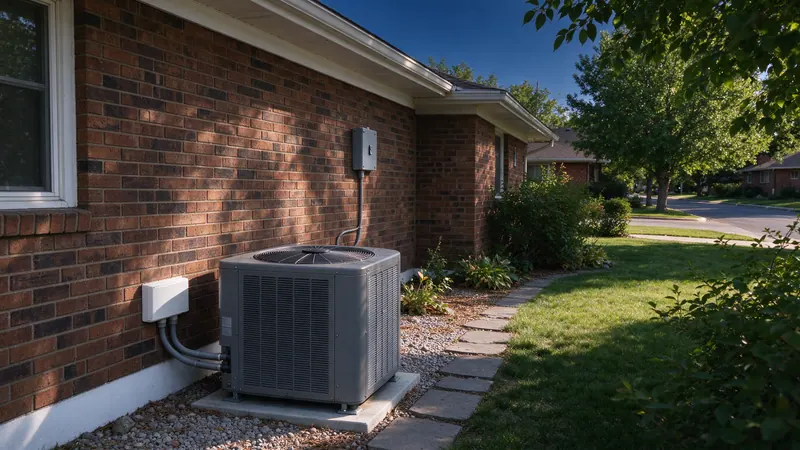
- Old condenser spot: the new outdoor unit goes here where it works
Heat pump work we do in Denver
Sundog installs, converts and services heat pumps across Denver:
- Heat pump installation on existing ducts, with returns fixed in the same job when the readings call for it
- Furnace to heat pump conversion, capping the furnace gas branch while the range and water heater stay on gas
- Dual-fuel systems that keep a gas furnace for the coldest hours
- Ductless mini-splits for finished attics, basements and rooms without ducts
- Repair and replacement of heat pumps already in place
How a Denver job usually runs
Permit path
Denver is a consolidated city and county, so permits come from the city's Community Planning and Development. We check which permit path your scope takes and whether the outdoor unit needs zoning or landmark review.
Measurements
Load calculation, static pressure, return size, the panel's existing load and the side-yard route for the line set. We also look at the basement stair, any finished ceiling a new return has to cross and how close the outdoor spot sits to the neighbor's bedroom windows, because each of those changes the labor on the estimate.
Written estimate
Equipment with its low-temperature capacity, return or duct work, circuits, permit, removal and start-up checks, each on its own line.
Install
Basement equipment out in sections where the stair is tight, air handler or coil set, the outdoor unit on a raised pad and lines run through the rim joist instead of masonry where the wall allows.
Start-up and inspection
Airflow, charge, defrost and backup staging recorded and left with you, then the city's inspection.
Denver housing and what it means for a heat pump
Denver's housing is older than most of the suburbs we serve, and that age shows up in three places on an estimate.
A median house from 1975
Census estimates put the median year built for Denver homes at 1975, give or take a year, with far older and far newer houses on either side. Ducts from the furnace era were sized for hot supply air. A heat pump's supply air feels cooler, so it relies on volume, and a return that was adequate for the old furnace can become the limit for the new system. That is why our Denver estimates list return work as its own line instead of folding it into the equipment price.
Mostly gas, with a large electric share
About 60.8% of occupied Denver homes heat with utility gas and 35.6% with electricity. For the gas majority the decision is all-electric or dual fuel, and it turns on the furnace's age and your Xcel rates; our heat pump vs gas furnace guide lays out the trade. For homes already on electric heat, a heat pump replaces resistance heat outright.
City permits and city programs
Denver runs its own permits. Its heat-pump guidance allows a quick permit for replacing equipment with a more efficient unit at the same capacity with no other alterations, so a new return, a panel change or a new outdoor location can move a job onto a fuller review. Denver's climate office also runs its own building-electrification rebates alongside Xcel's program. Eligibility and funding change, so we check what applies to your address before the estimate is final.
All-electric or dual fuel in a Denver house
Either way, we set the controls from the load calculation and the unit's published low-temperature output, not a rule of thumb.
| All-electric cold-climate | Dual fuel | |
|---|---|---|
| Fits best | Furnace near end of life, ducts that carry the airflow | Furnace with years left, or a wish to keep gas for cold nights |
| Backup heat | Electric strip, staged | Gas furnace below a set changeover |
| Gas service | Furnace branch capped; other gas appliances stay | Unchanged |
| Sundog's typical range | $13,000 to $25,000 | $19,000 to $28,000 with a new furnace |
A typical Denver brick-ranch heat pump installation
- Project price
- $18,400
- On site
- 3 days
- Where
- Denver
- The house
- 1950s brick ranch with full basement
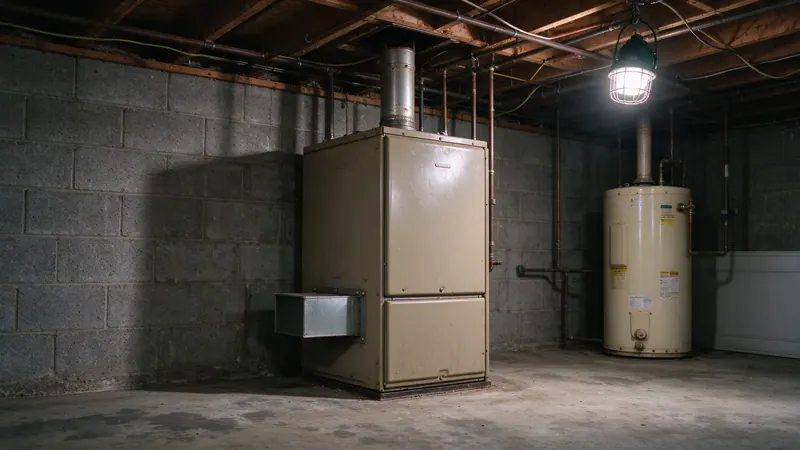
Denver's postwar brick ranches often still run a basement furnace and an AC of about the same age, both near the end. This one was a late-1950s three-bedroom ranch, about 1,250 square feet over a full basement, and the whole house breathed through a single 14x8 return in the hallway. The living room ran stuffy in summer and the return whistled.
We started with a load calculation, which put the house at 3 tons, and a static-pressure test, which read about 0.9 inches at the blower. A variable-speed air handler cannot move its rated air against that, so the return got fixed in the same job rather than left for later. We panned a joist bay under the living room and added a 20x20 floor return tied into the new return plenum.
The old 80% furnace came out and a matched variable-speed air handler with 8 kW of backup strip took its spot. Outside, the 3-ton cold-climate unit went on 6-inch risers clear of the side-yard fence, fed by a 35-foot line set through the rim joist rather than the brick. The 100-amp panel's load calculation supported a 30-amp outdoor circuit and a 45-amp strip circuit. We evacuated below 500 microns, set backup to stage only when the heat pump falls behind, and commissioned airflow, charge and defrost before the city's inspection.
The gas line was capped at the furnace shutoff; the water heater and range stayed on gas.
Backup heat on an older Denver panel
The backup decision and the panel decision are the same decision in many Denver houses. An all-electric heat pump needs an outdoor circuit plus a circuit for the backup strip, and the strip is the larger of the two. Sizing that strip to the whole house's heat loss can push a 100-amp panel past what it carries. Sizing it to the gap between the heat pump's low-temperature output and the house's load usually keeps it smaller.
So we work the numbers in order. First the load calculation at design conditions, then the selected unit's published output at 5°F, then the difference, which is what the strip has to cover. Only then do we run the panel load calculation with the range, dryer and water heater counted. If the panel still comes up short, dual fuel keeps the backup on gas and the electrical work small, and the estimate shows both routes side by side.
Find out what your Denver house needs first
Send us the age of the furnace and AC, the panel rating if you know it and the rooms that bother you. You get a first range from our typical rates, then we book the visit. Call (719) 417-2475 or get an estimate.
Get an EstimateHeat pump questions in Denver
How much does a heat pump cost in Denver?
Sundog's typical range for a cold-climate ducted heat pump on suitable existing ducts is $13,000 to $25,000, and dual fuel with a new gas furnace is $19,000 to $28,000. In Denver the items that most often move a price are return work, circuits on an older panel and the line-set route, and each one is listed on the written estimate after the site visit.
Does a 100-amp panel need an upgrade for a heat pump?
Not always. We total the existing load and check whether the panel can carry the outdoor circuit and a right-sized backup strip. When it can't, the estimate shows the options, from a smaller staged strip to dual fuel to panel work.
Who issues the permit for a heat pump in Denver?
The City and County of Denver, through Community Planning and Development. The permit path depends on the scope, and exterior equipment in a new spot can add zoning or landmark review, so we confirm the path for your address.
Can I keep my gas range and water heater?
Yes. In an all-electric heating conversion we cap only the furnace branch at its shutoff. The gas meter stays for the appliances you keep.
Will a heat pump keep a Denver house warm in a cold snap?
A cold-climate model chosen by its published output at 5°F carries most Denver winter weather. On the coldest hours and during defrost, backup heat covers the gap, either your furnace or a staged electric strip sized from the load calculation.