Last Updated: November 2026
Last Updated: November 2026
A lot of Highlands Ranch houses still run the furnace and air conditioner they were built with, and the two tend to wear out within a season or two of each other. That timing is an opening. Sundog plans heat pump installation in Highlands Ranch as one decision covering both: keep gas as backup, replace the furnace alongside the heat pump, or go all-electric.
The first visit includes a room-by-room load calculation, duct and airflow checks and a panel check, so each option on the written estimate is sized to the house rather than to the old nameplates.
Common starting points in Highlands Ranch
Both systems near the end
The furnace and AC are from the same year and one has started to fail. Replacing both at once lets the coil, blower and heat pump be matched and commissioned together.
Upstairs warm, basement cool
Two floors plus a finished basement on one thermostat. A variable-speed system helps, and sometimes the ducts or a second zone have to do the rest.
Keep gas for the coldest nights
Three of every four homes here heat with gas, and many owners want to keep it. A dual-fuel system lets the heat pump carry most days and the furnace take the coldest ones.
The AC alone has failed
If the furnace still has good years, a heat pump can replace just the AC and share the heating with it. We check that the furnace's blower and coil can work with the new outdoor unit.
Work we do in Highlands Ranch
Replacement and dual fuel
Heat pump replacement for older heat pumps and ACs, dual fuel with a kept or new furnace, and furnace-to-heat-pump conversion for owners ready to drop gas heat.
Zones, repairs, upkeep
Ductless heads for a basement office or bonus room, repair when a heat pump blows cool in heat mode, and yearly maintenance visits.
How a Highlands Ranch job usually runs
Visit
Load calculation, static pressure, the furnace's age and venting, the panel and the outdoor spot. In a finished basement we also note where new vent or line routes can run without opening the ceiling.
Two or three options
Usually dual fuel with a new furnace, dual fuel keeping the furnace, and all-electric, each priced line by line.
Permits and HOA
Highlands Ranch is unincorporated, so mechanical and electrical permits come from Douglas County's Building Division. If your HOA reviews exterior equipment, we give you the unit's size and location for the request.
Install and changeover
Equipment in, venting and circuits done, system commissioned. We set the changeover temperature with you and leave the readings.
Why Highlands Ranch jobs look the way they do
The local pattern is less about old ducts and more about timing and layout.
A late-1990s median
Census survey data puts the median year built in Highlands Ranch at 1997, within about a year. Equipment installed with those houses is now well past the ages when furnaces and ACs are usually replaced. When the originals go, the ducts are often in reasonable shape, and the decision centers on equipment, backup heat and controls rather than duct rebuilding.
Gas heat is the norm
About 75% of occupied homes heat with utility gas and about 23% with electricity. Most heat pump decisions here are therefore dual-fuel decisions: how cold it gets before the furnace takes over. A new high-efficiency furnace changes the venting, because it vents through PVC rather than the old metal flue, and the water heater may then need its own vent work.
County permits, larger houses
Highlands Ranch is a census-designated place in Douglas County, with a metro district but no city building department. Permits go to the county. Larger two-story plans mean longer upstairs runs and more stratification, so we check upstairs airflow before settling on one system or two zones.
Working around a finished basement
Finished basements are common here, and they decide where new pipes and lines can go.
Vent and line routes
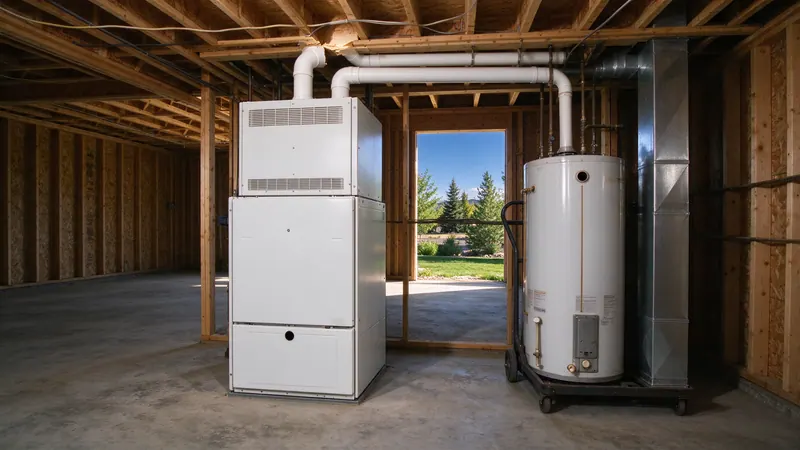
A high-efficiency furnace needs PVC intake and exhaust to an outside wall, and the heat pump needs a line set and a condensate path. We trace those routes through the unfinished mechanical room first, so the family-room ceiling stays closed wherever the layout allows. When a soffit or ceiling must open, it goes on the estimate with its patch.
Basement comfort
Basements sit partly below grade and lose heat slowly, so they often run cool in summer and comfortable in winter. A variable-speed blower on low speed helps even out the floors. A basement office or gym that never matches the rest of the house can take a single ductless head instead of a duct change.
Setting the changeover
In a dual-fuel house, the changeover temperature decides how much of the winter the heat pump runs. We set it with you, not by default.
Set lower
The heat pump runs into colder weather and the furnace only covers the hardest hours. It suits a cold-climate model and owners who want to burn less gas. See our backup heat guide.
Set higher
The furnace takes over sooner. It suits a standard heat pump or a rate structure where gas is cheaper per unit of heat at your address. Our operating cost guide shows how the comparison works.
Why plan both systems together
- One visit, one load calculation and one set of start-up readings for the whole system.
- The coil, blower and heat pump are matched from the start, which a piecemeal replacement often misses.
- The new system is sized from the load, which in these houses often comes in below the original nameplate.
- Venting, gas and electrical changes are designed together, so nothing surprises you halfway through.
- The panel check comes before the estimate. A new 30- or 40-amp outdoor circuit often fits in a house of this age, but an electric backup strip in an all-electric plan needs real capacity, and we confirm it rather than assume it. Our panel guide explains the math.
- We check rebate eligibility for your address and equipment before the estimate is final, and list what the program needs from you.
Inside a Highlands Ranch dual-fuel replacement
- Project price
- $23,400
- On site
- 2.5 days
- Where
- Highlands Ranch
- The house
- Late-1990s two-story with finished basement
When the furnace and the air conditioner in a late-1990s Highlands Ranch two-story reach the end together, it makes sense to plan heat and cooling as one job. In this house the original 80% furnace had rusted burners, the AC coil was leaking oil at a braze joint, and both were about 27 years old. Three of every four homes in Highlands Ranch heat with gas, and these owners wanted to keep it for the coldest nights.
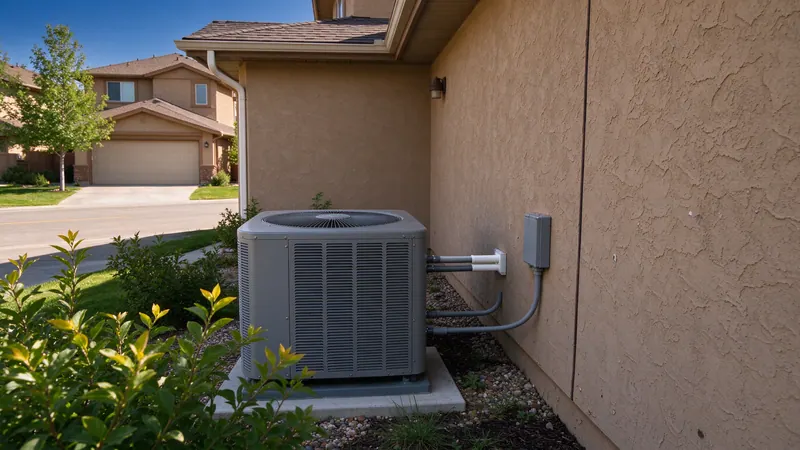
We started with a load calculation instead of reading the old nameplate. It came out at 3 tons, not the 3.5-ton unit that was there, so we paired a 3-ton cold-climate variable-speed heat pump with a new 96% two-stage furnace and a matched coil. The new furnace couldn't share the old metal vent, so we ran 2-inch PVC intake and exhaust out through the rim joist inside the unfinished mechanical room, clear of the patio door and gas meter, and relined the water heater's vent for one appliance. Outside, a 30-foot line set was brazed under nitrogen and pulled down below 500 microns before the refrigerant was released, and a new 30-amp circuit fed the disconnect.
The changeover temperature was the decision that made this house different. We sat down with the owners, looked at their gas and electric rates, and set the outdoor temperature where the furnace takes over. Then the county inspection, combustion readings and a walk through the thermostat closed it out.
Typical Highlands Ranch costs
Sundog prices from one set of company ranges across the service area. In Highlands Ranch, whether the furnace is replaced is the biggest swing, followed by capacity and venting. The cost guide lists what else moves the price.
| Work | Sundog's typical range |
|---|---|
| Dual fuel with a new gas furnace and cold-climate heat pump | $19,000 to $28,000 |
| Cold-climate ducted heat pump, suitable existing ducts | $13,000 to $25,000 |
| Ductless, one zone | $4,500 to $9,500 |
| Heat pump maintenance visit | $100 to $200 |
Nearby service areas
Littleton
Northwest, with early-1980s housing where duct repair often comes before the heat pump. Littleton service area.
Lone Tree
Just east, with newer housing that dates from the mid-2000s on average. Lone Tree service area.
Greenwood Village
North, with a mix of homes and offices and its own city permits. Greenwood Village service area.
Plan the replacement before the next failure
Send us the furnace and AC nameplates and a photo of the panel. We give you a first range from our typical rates and book the visit. Call (719) 417-2475 or request an estimate.
Get an EstimateHeat pump questions in Highlands Ranch
What does a dual-fuel replacement cost in Highlands Ranch?
Sundog's typical range for dual fuel with a new gas furnace and a cold-climate heat pump is $19,000 to $28,000. Keeping a sound furnace usually costs less. The site visit and written estimate set your price.
Do I need a permit in Highlands Ranch?
Yes. Highlands Ranch is unincorporated, so Douglas County's Building Division issues the mechanical and electrical permits and inspects the work. We confirm the requirements for your address.
Should I replace a working furnace when the AC fails?
Not always. If the furnace is sound and its blower and coil can work with a heat pump, keeping it as backup is often the better value. If it is the same age as the failed AC, replacing both together avoids a second install soon after.
Can one system keep two floors and a basement even?
Often, with a variable-speed system and good upstairs airflow. Where the upstairs supply or return is short, we add capacity there or split the house into zones, and we tell you which before you commit.
Does my HOA need to approve the outdoor unit?
Some HOAs review exterior equipment and some do not. If yours does, we give you the unit's dimensions, location and stand details to submit with your request.