Last Updated: November 2026
Sundog repairs and replaces heat pumps in Lone Tree. About three in ten homes here already heat with electricity, and a heat pump installed when a mid-2000s home was new is now close to twenty years old. When one stops heating, you face a real choice: fix the failed part, or replace a system that may run on R-22, a refrigerant no longer produced for new supply.
We test before we recommend. A repair visit identifies the failed part and prices it against what is left of the system. Sundog's typical range for heat pump repair is $150 to $1,200 for routine work and $1,500 to $3,500 for major components. A cold-climate ducted replacement on suitable existing ducts is $13,000 to $25,000, set by the site visit and written estimate.
When Lone Tree owners call us
Two of these are repair calls, two are planning calls. All four begin with a test or a measurement.
The house is heating on the backup strip alone
If rooms warm slowly and the bill jumps, the outdoor unit may not be heating at all. Repair starts with tests on the compressor, controls and reversing valve.
A major part fails on an R-22 system
A compressor or coil on obsolete refrigerant is usually where we recommend replacement, and we show both prices.
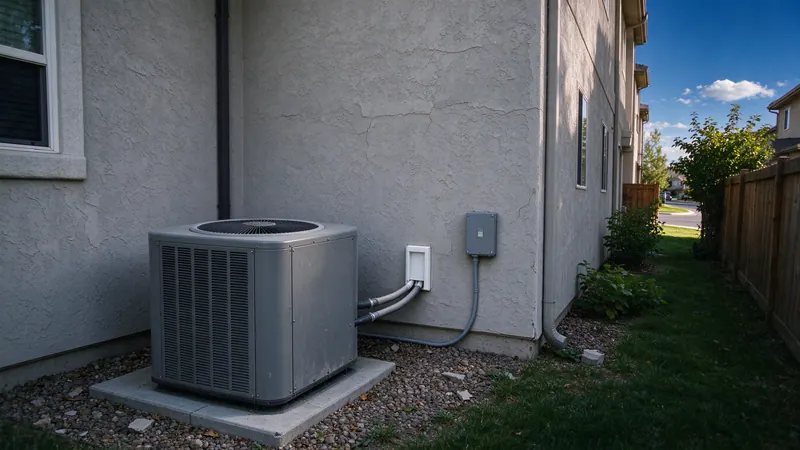
The outdoor unit sits in a narrow side yard
Tight yards and HOA screens limit unit size. We choose a model whose clearances fit and send its dimensions to the HOA before ordering.
A newer system you want to keep that way
If your heat pump is newer, a yearly maintenance visit checks charge, airflow and drains so small problems stay small.
Heat pump services in Lone Tree
Sundog handles these heat pump services in Lone Tree:
- Heat pump repair with testing before any part is replaced
- Heat pump replacement of outdoor unit and air handler as a matched pair
- Cold-climate equipment for homes already all-electric
- Heat pump maintenance for systems with years left
- Ductless mini-splits for lofts and rooms the ducts underserve
How a Lone Tree job usually runs
Diagnosis
Electrical tests, refrigerant pressures and line temperatures, and a look at the indoor coil before any part is condemned. If the house is heating on its strip alone, we check the strip circuit too, since it has been carrying the full load.
Repair or replace, in writing
Both options priced when the answer is close, with the refrigerant type and the system's age stated.
HOA and access
Outdoor unit dimensions and color sent for approval, and access through shared side yards arranged in advance. Where old equipment has to come out through a garage or a narrow gate, we plan the carry route at the visit so install day is not spent improvising.
Permit
A City of Lone Tree mechanical permit, applied for through the city's online portal.
Install and start-up
Old equipment out, new pair set, line set tested or replaced, charge, airflow and both modes recorded and left with you.
Lone Tree housing and permits
Lone Tree is one of the younger cities in the south metro, and it is still growing.
Mid-2000s housing
Census estimates put the median year built at 2004, give or take two years. Equipment from that era is reaching the age when major components fail. Systems installed before 2010 may use R-22, which no longer has new production, so the cost of recharging after a major repair is part of every repair-or-replace conversation here.
A higher electric share
About 30.8% of occupied homes heat with electricity and 65.3% with utility gas. Where a heat pump is already the main heat, the decision is not a fuel conversion. It is replacing like with better: a cold-climate model and matched air handler that carry more of the winter before the strip comes on.
City permits and growth
Lone Tree incorporated in 1995 and takes permit applications electronically through its online portal. The city lists the 2021 International Mechanical Code with local amendments as its current code, and its plan review list asks for Manual J and D reports for mechanical systems on reviewed projects. Growth continues in RidgeGate, south of Lincoln Avenue on both sides of I-25, where newer homes have years to go before their first replacement and a maintenance visit is the sensible first call.
Why we test before recommending
A failed heat pump can look the same from inside whether the cause is a small control part or a compressor. Testing first means you pay for the part that actually failed.
Find the failed part
Voltage at the controls, a megohmmeter on the compressor windings, refrigerant pressures and line temperatures. Each test rules something in or out before any part is ordered.
Price both when it is close
On an older system with a major failure, you get the repair price and the replacement price on one page, with the refrigerant type and age noted. Our repair or replace guide explains how we weigh them.
A typical Lone Tree townhome heat pump replacement
- Project price
- $14,300
- On site
- 2 days
- Where
- Lone Tree
- The house
- Mid-2000s two-story townhome
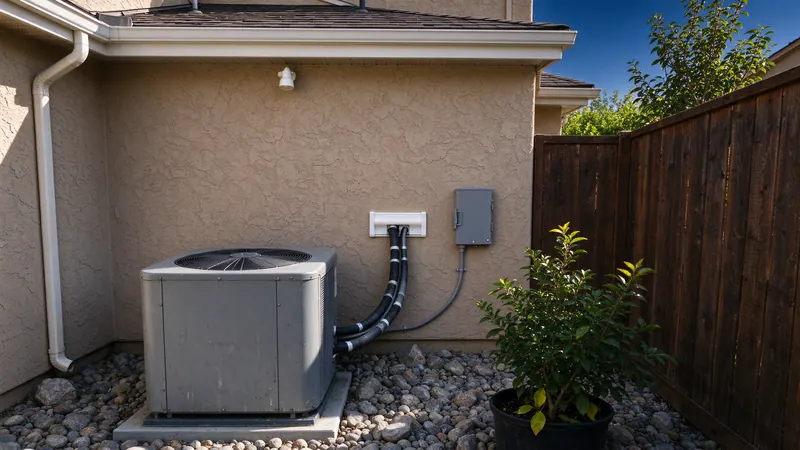
Much of Lone Tree was built in the mid-2000s, and some of its townhomes came with heat pumps that are now close to 20 years old. Here the outdoor unit stopped heating and the house was warming on its backup strip alone. A megohmmeter test showed a grounded compressor winding.
A new compressor on an 18-year-old R-22 system meant a major part on obsolete refrigerant, sitting next to a corroded indoor coil. We recommended replacing the outdoor unit and air handler together with a 2.5-ton cold-climate variable-speed heat pump and a matched air handler with an 8 kW strip.
The setting shaped the rest. The pad sat in a side yard about 4 feet wide, inside an HOA screen, so we picked a compact unit that kept the manufacturer's clearances and sent its dimensions and color to the HOA before ordering. The 28-foot line set ran inside finished walls between the garage and the side yard. It was the right size for the new unit, so we kept it: flushed, pressure tested with nitrogen and held at vacuum before any refrigerant went in. Opening the drywall wasn't needed.
The old equipment came out by hand through the side yard and the garage closet. The existing breakers suited the new nameplate, so the electrical work stayed at a new disconnect and whip. After the city inspection we charged by weight, ran the system in heating and cooling, and put the screen back.
Replacing a heat pump as a matched pair
When replacement wins, we replace the outdoor unit and the air handler together. A new outdoor unit on an old indoor coil leaves you with a mismatched pair, an older coil that may already be corroded and, on an R-22 system, a coil designed for a different refrigerant. A matched pair is also what rebate programs and manufacturer ratings assume.
The line set is the part we try to keep. In attached homes it often runs inside finished walls between the garage and the outdoor unit. If it is the right size for the new equipment, we flush it, pressure test it with nitrogen and hold it at vacuum before any refrigerant goes in. If it fails those tests or is the wrong size, the estimate says so and prices the reroute, so drywall work never surprises you on install day.
Repair or replace: what we weigh in Lone Tree
No single factor decides it. We put these on the written estimate so you can see how the recommendation was reached, and the choice stays yours.
| Factor | Leans toward repair | Leans toward replacement |
|---|---|---|
| Failed part | Capacitor, contactor, sensor, drain, reversing-valve coil | Compressor, outdoor coil, or a valve on a system with other wear |
| Refrigerant | R-410A or newer, small or no recharge | R-22, or a leak that needs a large recharge |
| System age | Under about ten years | Close to twenty years |
| Indoor coil | Clean and sound | Corroded or leaking |
| How it heated | Kept the house comfortable before the failure | Leaned on the backup strip for years |
Start with a test
Tell us what the system is doing, its age if you know it and whether an HOA reviews outdoor equipment. We book a diagnostic visit and price what we find. Call (719) 417-2475 or get an estimate.
Get an EstimateHeat pump questions in Lone Tree
What does heat pump repair or replacement cost in Lone Tree?
Sundog's typical range for routine heat pump repair is $150 to $1,200, and major components run $1,500 to $3,500. A cold-climate ducted replacement on suitable existing ducts is $13,000 to $25,000. The diagnosis sets the repair price; the site visit and written estimate set the replacement price.
Should I repair a heat pump that uses R-22?
For a small part, often yes. For a compressor, a coil or a leak that needs a large recharge, replacement usually makes more sense, because R-22 is no longer produced for new supply. We price both so you can compare.
Can you reuse the line set inside my walls?
If it is the right size for the new equipment and passes a flush, a nitrogen pressure test and a vacuum hold, yes. If not, we say so on the estimate and price the reroute before any work starts.
Does Lone Tree require a permit to replace a heat pump?
Yes. Replacement goes through a City of Lone Tree mechanical permit, applied for through the city's online portal, and an inspection follows the install.
What does my HOA need from you before a replacement?
Usually the outdoor unit's dimensions, color and location, and sometimes the screen or pad details. We send what your HOA asks for and wait for approval before ordering equipment.