Last Updated: November 2026
If your AC is failing and the furnace still works, or you want to burn less gas without giving up gas heat on the coldest nights, dual fuel is usually the first system to look at. Sundog installs dual-fuel heat pumps across Aurora: a heat pump takes the AC's place and carries the mild and moderate weather, and your gas furnace takes over below an outdoor temperature we set with you.
The practical choice is whether the furnace stays or goes. A furnace with years left can be paired with a new cold-climate heat pump if its blower and the new coil can work together. A furnace near the end of its life is usually replaced at the same time, and Sundog's typical range for dual fuel with a new gas furnace and cold-climate heat pump is $19,000 to $28,000, set at the site visit and in the written estimate. If only the AC has failed and you are still deciding, our heat pump replacement page covers the repair-or-replace question first.
Setting the changeover in a Highlands Ranch dual-fuel system
- Project price
- $23,400
- On site
- 2.5 days
- Where
- Highlands Ranch
- The house
- Late-1990s two-story with finished basement
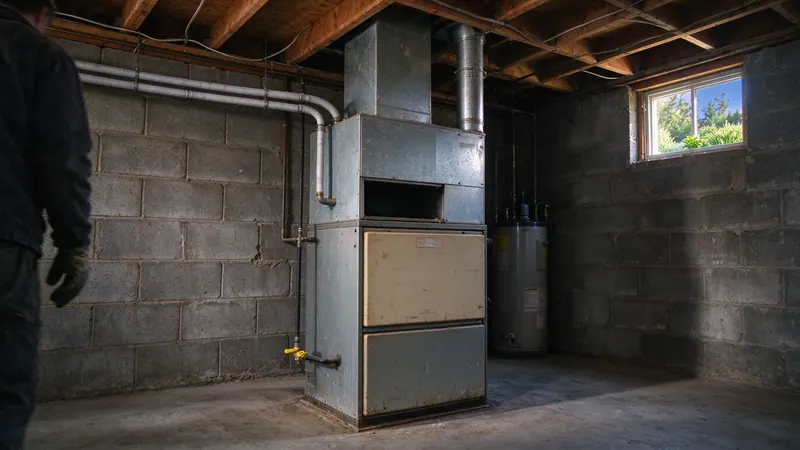
In a dual-fuel system, the most important setting is the outdoor temperature at which the furnace takes over. In this late-1990s Highlands Ranch two-story, the original 80% furnace had rusted burners and the AC coil was leaking oil at a braze joint. Both were about 27 years old, and the owners wanted to keep gas for the coldest nights.
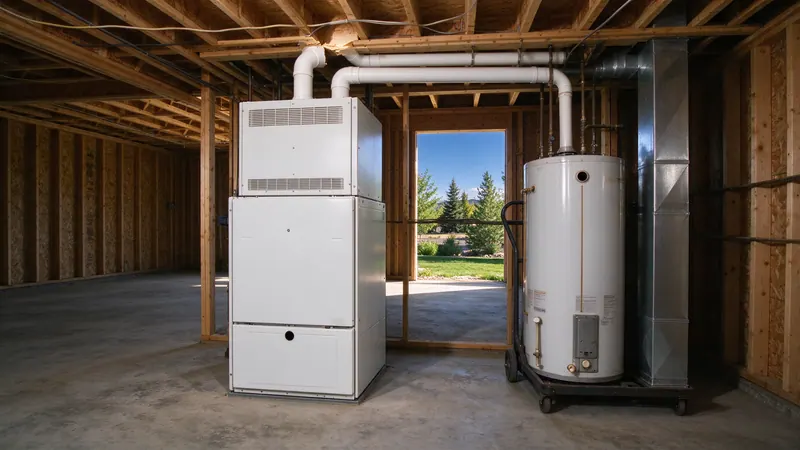
The load calculation came out at 3 tons, against the 3.5-ton unit that was there. We paired a 3-ton cold-climate variable-speed heat pump with a new 96% two-stage furnace and a matched coil, so the blower, coil and controls work as one system. Keeping the old furnace was not worth it at its age.
The furnace change shaped the install. The 96% unit couldn't use the old metal vent, so 2-inch PVC intake and exhaust ran through the rim joist in the unfinished mechanical room, clear of the patio door and gas meter. The water heater's vent was relined for one appliance. Outside, a 30-foot line set was brazed under nitrogen and evacuated below 500 microns, and a new 30-amp circuit fed the disconnect.
Then we set the changeover with the owners from their own gas and electric rates, not a default. Combustion readings, the county inspection and a walk through the thermostat finished the job.
What happens on the first visit
A dual-fuel visit looks hard at the furnace, because whether it stays shapes the rest of the job.
The furnace itself
We note its age, efficiency rating and venting, look at the burners and the parts of the heat exchanger we can see, and check the blower motor. A single-speed blower limits what a variable-speed heat pump can do.
Coil and cabinet fit
We measure the furnace cabinet and the space above it, because the heat pump coil sits on the furnace and has to match both the furnace width and the outdoor unit.
Load and airflow
We run the room-by-room load and read static pressure, since the heat pump needs steadier airflow at lower supply temperatures than the furnace alone. The sizing guide explains the load.
Your rates and preferences
We ask for recent Xcel gas and electric bills and how you want the house to feel on a cold night. Both feed the changeover setting.
Keep the furnace or replace it
Both are dual fuel. The difference is how much of the indoor side is new, and what the furnace change brings with it.
Keeping the furnace
Makes sense when the furnace is mid-life, sound and has a variable-speed or multi-speed blower that can deliver the heat pump's airflow. The job is the outdoor unit, a matched coil on the furnace, a line set, one circuit and new controls. It costs less than replacing both, and the furnace's venting stays as it is.
Replacing the furnace too
Makes sense when the furnace is near the end of its life, has a single-speed blower or will not take a matched coil. Both go in together, matched and controlled as one system, with one set of start-up readings. Moving from an 80 percent furnace to a condensing one adds PVC venting and a condensate drain, and can leave a gas water heater alone on a vent sized for two, which then needs relining.
How the switch between heat pump and furnace works
The controls run one heat source at a time. Above the changeover temperature the heat pump heats the house. Below it, the controls shut off the compressor and fire the furnace. They do not run together for normal heating, because furnace heat blowing across the heat pump's coil drives refrigerant pressures too high. The one exception is defrost: while the outdoor coil clears its frost, the furnace can fire briefly so the registers do not blow cool air.
Where to set the changeover comes from two numbers. The thermal balance point is the outdoor temperature where the heat pump's output equals the house's heat loss; below it, the heat pump alone falls behind. The cost balance point is where a unit of heat from the heat pump costs the same as one from the furnace, which depends on your Xcel gas and electric rates, the furnace's efficiency and the heat pump's efficiency as the air cools. We start the changeover at the higher of the two and adjust it with you if comfort or rates change. Our backup heat guide compares gas and electric backup. Our guide to operating cost in Colorado shows the arithmetic.
Matching the coil, blower and controls
A dual-fuel system works well only when its parts were chosen for each other. These are the four we match.
The coil
The indoor coil is chosen as a matched pair with the outdoor unit and sized to the furnace cabinet. A mismatched coil changes the system's rated capacity and efficiency, and rebate programs usually ask for the matched model numbers.
The blower
A heat pump needs steady airflow at its own speeds. A variable-speed blower follows the heat pump as it ramps up and down; a single-speed blower runs flat out or not at all. See ductwork for heat pumps for why airflow matters.
Thermostat and outdoor sensor
Dual fuel needs a thermostat or control board that reads the outdoor temperature and locks out one heat source while the other runs. We wire the outdoor sensor and set the lockouts.
Venting and combustion
Any furnace change gets a combustion test and a vent check. When a water heater is left alone on an old shared vent, we reline it for one appliance and test its draft.
Living with two heat sources
Dual fuel means two systems to keep up. The furnace runs fewer hours than before, but it still needs its yearly combustion and safety check, and the heat pump adds an outdoor coil to keep clear of snow, leaves and grass clippings. A heat pump maintenance visit covers the heat pump side: coil, drain, charge and airflow readings.
Dual fuel also leaves the door open. If you later decide to leave gas, the outdoor unit and line set can often carry over to an all-electric setup with a matched air handler and electric backup, which is the conversion path. Whether your panel can carry that backup is a question we can answer at the same visit; see the electrical panel guide. If you are not sure which way your house leans, the fit assessment is a quick place to start.
Rebates on a dual-fuel system
Xcel Energy runs a residential heat-pump rebate for qualifying equipment at qualifying service addresses, and Aurora's F-3 program covers a mapped area with active Xcel gas service, which makes it worth checking for a house that keeps gas heat. Eligibility depends on your address, the matched equipment and how the job is installed, and each program has its own installation and application dates, so check the current program dates. We check what applies before the estimate is final and list what each program needs from you. The federal 25C tax credit ended for systems installed after 2025. See our Aurora rebate guide and the incentive checklist.
What is included in a dual-fuel installation
- Furnace condition, blower and cabinet checked before we recommend keeping it
- Matched coil and cold-climate heat pump, with model numbers and low-temperature capacity on the estimate
- Where the furnace is replaced: new furnace, PVC venting and condensate drain
- Water heater vent relined and draft-tested where the furnace leaves a shared vent
- Line set, pad or stand above the snow line, outdoor circuit and disconnect
- Dual-fuel thermostat or control with an outdoor sensor, lockouts set
- Mechanical and electrical permits, with gas work inspected where the furnace changes
- Start-up readings for both heat sources, combustion results and the changeover setting left with you
Keep the furnace, replace it, or go all-electric
| Dual fuel, furnace kept | Dual fuel, new furnace | All-electric heat pump | |
|---|---|---|---|
| Best fit | A sound furnace with a capable blower and a failing AC | A furnace and AC both near the end | Good ducts, panel room, a wish to leave gas |
| Cold-night heat | Your existing furnace | The new furnace | Heat pump plus electric strip in stages |
| Panel load | Outdoor circuit only | Outdoor circuit only | Outdoor circuit plus backup circuits |
| Our typical range | Priced at the visit; less than replacing both | $19,000 to $28,000 | $13,000 to $25,000 |
How the job runs
- VisitFurnace, coil fit, load, your bills
- Written estimateKeep or replace priced
- PermitsMechanical, electrical, gas
- InstallUsually one to four days
- Start-upBoth heat sources tested, changeover set
Find out what your house needs before you compare equipment.
Get an EstimateQuestions about dual-fuel heat pump
At what temperature should my system switch to gas?
There is no single right number. We set it from the heat pump's output, your house's heat loss and your gas and electric rates, then adjust it with you after the first cold spell if needed.
Can I add a heat pump to my existing furnace?
Often, if the furnace is in good shape, its blower can deliver the heat pump's airflow and a matched coil fits the cabinet. We check all three on the visit.
Will dual fuel lower my heating bill?
We do not promise a percentage. The result depends on your rates, where the changeover sits, the winter and how you use the thermostat. We work from your own bills.
Do the furnace and heat pump ever run together?
Not for normal heating. The controls lock one out while the other runs. The furnace may fire briefly during defrost so the vents do not blow cool air.
What does the written estimate include?
Model numbers and low-temperature capacity, duct and electrical work, the permit, removal, the pad or stand and the start-up checks, each on its own line.