Last Updated: November 2026
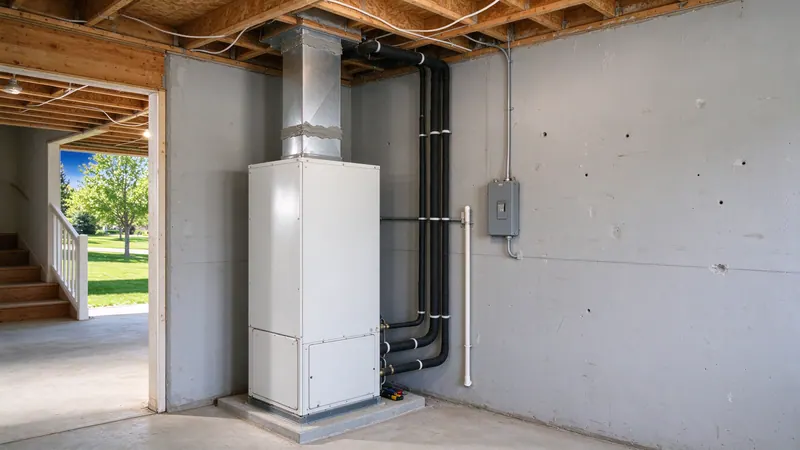
Most houses in the towns around Aurora heat with gas, and moving one off gas heat starts with a few specific questions. A conversion replaces the furnace and central AC with an all-electric heat pump that heats and cools through your existing ducts, with electric backup sized for the coldest hours. Sundog converts gas-heated homes to heat pumps across Aurora and nearby towns, and we start with the parts of the house that decide how simple the change is: the electrical panel, the ducts and everything else on the gas line.
Some things carry over: the ducts, usually the registers and the thermostat wiring, sometimes the pad. Others change: the furnace leaves, the gas branch that fed it is capped, the panel takes on new circuits, and a water heater that shared the furnace's vent may need its own. Sundog's typical range for a cold-climate ducted heat pump on suitable existing ducts is $13,000 to $25,000, set at the site visit and in the written estimate; panel work, if the house needs it, is its own line. Weighing the two heat sources first? Read heat pump vs gas furnace.
Converting from gas when the furnace fails
- Project price
- $19,600
- On site
- 2 days
- Where
- Thornton
- The house
- Late-1990s two-story, 150-amp panel
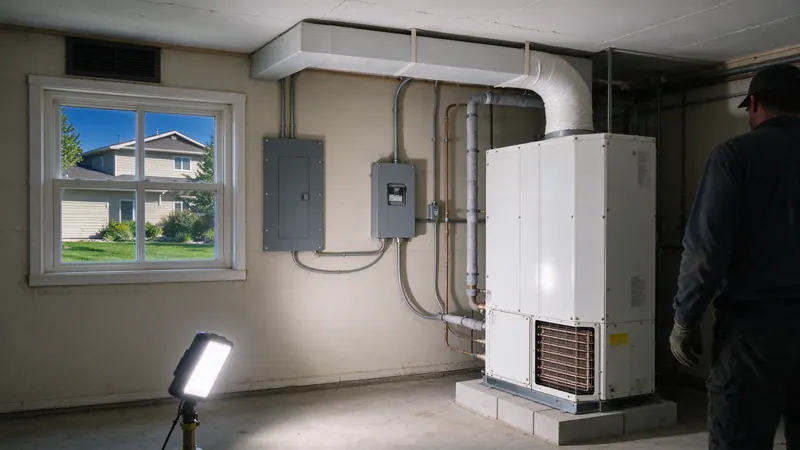
A furnace that dies in late autumn forces a quick decision. In this late-1990s Thornton two-story, the 27-year-old 80% furnace lost both its inducer motor and its control board, and the AC still ran on R-22. The owners chose to convert to all-electric rather than buy another furnace.
A conversion stands or falls on the electrical panel. This house had 150-amp service that already carried an electric dryer and range. We took clamp readings and ran a panel load calculation before ordering anything. It showed room for a 30-amp outdoor circuit and a 60-amp circuit for 10 kW of electric backup, so no service upgrade was needed.
The house load for about 1,900 square feet was 3 tons. We recovered the R-22 and removed both units. The old line set was the wrong size for the new refrigerant, so a new 35-foot 3/8 x 3/4 line ran along the basement ceiling to the patio side. A matched variable-speed air handler with the 10 kW strip took the furnace's place, and the cold-climate outdoor unit got its own fused disconnect.
The backup was staged and locked out in mild weather, so it runs only when the heat pump falls behind. Once commissioning was done, we capped the furnace gas branch and the water heater stayed on gas. The city inspected the mechanical and electrical work.
What happens on the first visit
A conversion visit maps the house's energy, not just its heating. These four checks decide the scope.
The panel and service
We read the panel's rating and what already runs on it, and take readings to work out the existing load before adding the outdoor unit and electric backup. This decides whether the job needs a service upgrade.
Everything on the gas line
We list each gas appliance: furnace, water heater, range, dryer, fireplace. What stays on gas changes how the furnace branch is capped and whether the water heater's vent still works.
Ducts and the return
Room-by-room load, static pressure and a look at the returns, so the air handler that replaces the furnace gets the airflow it needs. See ductwork for heat pumps.
Where the air handler goes
The new air handler usually takes the furnace's spot. We check the space, the condensate drain and the line-set path to the outdoor unit. The installation process guide shows the order of work.
Can your panel carry an all-electric system?
The outdoor unit needs its own circuit. Electric backup needs more: a 10 kW strip draws about 42 amps at 240 volts, which usually means a 60-amp circuit. Whether that fits depends on the panel's rating and what is already on it, an electric range and dryer in particular.
We take the existing load from readings and the house's equipment, add the new loads and run the calculation before we order anything, as in the Thornton house above. When the numbers do not fit, the options are a smaller or more finely staged strip, equipment with more output at low temperatures so less backup is needed, a device that holds off a large load while backup runs, or a service upgrade. Each has a different cost, and we show them side by side. Aurora reviews new electrical permits under the 2026 National Electrical Code from August 1, 2026, so panel and circuit work is planned and permitted with the job. Our panel guide goes through the load calculation.
Backup heat once the furnace is gone
Without a furnace, the backup is electric unless you choose otherwise, and the question is how much.
Staged electric strip
The usual choice. Sized to the gap between the heat pump's low-temperature output and the house's heat loss, split into stages and locked out in mild weather so it runs only when the heat pump falls behind; the backup heat guide covers sizing. Choosing equipment from its 5°F output keeps the strip small.
Keeping a furnace after all
If the panel is tight or you want gas on the coldest nights, dual fuel keeps a furnace and needs no strip circuit. It still moves most of the winter's heating to the heat pump.
What happens to the bills
After a conversion your heating cost moves from the gas line of the Xcel bill to the electric line. How the total compares depends on your rates, how cold the winter gets, how the thermostat is used and, above all, how often the electric strip runs. An all-electric house pays most for backup hours, not heat-pump hours, which is why we keep the strip small, staged and locked out in mild weather.
We do not promise a savings figure. We work from your own bills and show what the new system draws at different outdoor temperatures. Our guide to operating cost in Colorado shows the arithmetic, and the cost estimator places a conversion in our typical ranges.
Capping the gas and the water heater question
Taking the furnace out touches the gas system and, in many houses, the water heater. This is the part of a conversion that is easiest to overlook.
Capping the furnace branch
Once the heat pump is running, we shut off and cap the gas branch that fed the furnace at its shutoff and leak-test the cap. The rest of the gas piping stays live for whatever still uses it.
A water heater left on its own
In many houses the furnace and water heater share one metal vent. With the furnace gone, that vent can be too large for the water heater alone, which then drafts poorly and condenses. We check it and reline or resize it where needed, then test the draft.
Combustion air and alarms
Gas appliances that remain still need their combustion air and working carbon monoxide alarms. Removing the furnace does not remove those needs.
The gas meter
If nothing else in the house uses gas, keeping or closing the gas service is a matter between you and Xcel. Check any rebate's gas-service rules before you change it.
Rebates on a conversion
Xcel Energy runs a residential heat-pump rebate for qualifying equipment at qualifying service addresses, with its own installation and application dates, so check the current program dates. Aurora's F-3 program covers a mapped area with active Xcel gas service, so check eligibility before you change your gas service. Both depend on your address, the matched equipment and how the job is installed. We check what applies before the estimate is final and list what each program needs from you. The federal 25C tax credit ended for systems installed after 2025. The Aurora rebate guide covers each program, and the cost page shows what goes into a conversion price.
What is included in a conversion
- Panel load calculation before any equipment is ordered
- Removal of the furnace, coil and AC, with refrigerant recovered
- Matched air handler with staged electric backup in the furnace's place
- Cold-climate outdoor unit on a pad or stand, new line set and disconnect
- Outdoor and backup circuits with the electrical permit; any panel or service work on its own line
- Furnace gas branch capped and leak-tested; water heater vent checked and corrected where needed
- Thermostat set for staged backup and an outdoor lockout
- Start-up readings, model numbers and rebate paperwork left with you
Full conversion, dual fuel or ductless
| Full conversion | Dual fuel | Ductless | |
|---|---|---|---|
| Heats with | Heat pump, staged electric backup | Heat pump, gas furnace below the changeover | Heat pump in each zone |
| Gas after the job | Furnace branch capped; other appliances unchanged | Furnace stays on gas | Furnace can stay for the rest of the house |
| Panel load | Outdoor circuit plus backup circuits | Outdoor circuit only | One circuit per outdoor unit |
| Our typical range | $13,000 to $25,000 with suitable ducts | $19,000 to $28,000 with a new furnace | $4,500 to $9,500 for one zone |
How the job runs
- VisitPanel, gas appliances, ducts, air handler spot
- Written estimatePanel work on its own line
- PermitsMechanical and electrical
- InstallUsually one to four days
- Start-upBackup staged, gas capped, city inspection
Find out what your house needs before you compare equipment.
Get an EstimateQuestions about heat pump conversion
Do I need a panel upgrade to convert to a heat pump?
Not always. It depends on the panel's rating, what is already on it and how much electric backup the house needs. We run the load calculation before the estimate is final.
What happens to my gas water heater?
It can stay on gas. If it shared a vent with the furnace, we check that vent and correct it where needed so the water heater drafts properly on its own.
Can I keep my gas range and dryer?
Yes. We cap only the branch that fed the furnace; the rest of the gas piping stays in service.
Will the house be without heat during the conversion?
There is a gap between the furnace coming out and the heat pump starting. We plan the order of work to keep it short, and the estimate says how many days the job takes.
What does the written estimate include?
Model numbers and low-temperature capacity, duct and electrical work, the permit, removal, the pad or stand and the start-up checks, each on its own line.